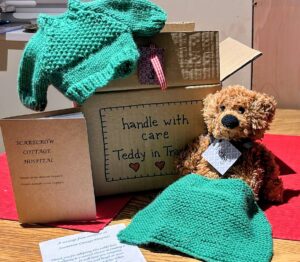
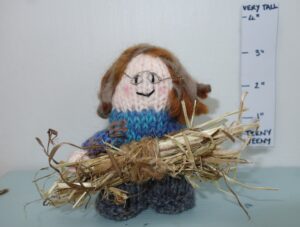
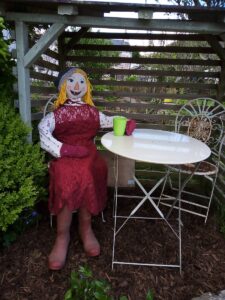
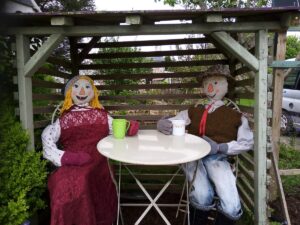
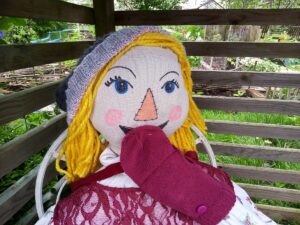
Doll-making is a form of story-telling. It’s easier when you don’t have a choice of stories.
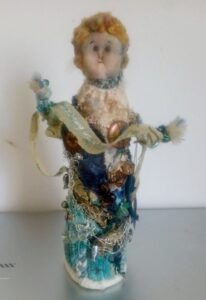
Hafren the Middle Child
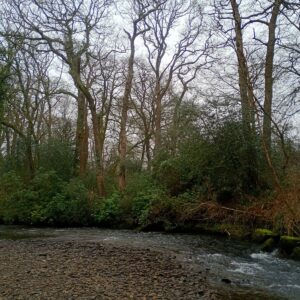
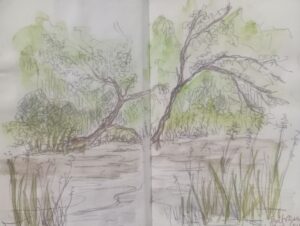
There’s a legend about a Welsh king called Pumlumon who lived on a mountain in North Wales. One day he cast out his three daughters and told them to find their way to the ocean. Ystwyth, the youngest daughter loved to play and was always full of energy. She ran as fast as she could to the west and soon reached the coast. Gwy, the eldest, was the most beautiful of Pumlumon’s children. She wandered south through the rugged hills and wooded slopes of Wales and all who met her marvelled at her loveliness. Hafren was not like her sisters: she was slow moving and plain looking but of the three, she was the one who was blessed with a kind and generous nature. Hafren took a long time to wind her way to the sea, making sure that the folk who lived alongside her would find plentiful food in her waters and that their farm land would be rich and fertile. The local people came to worship her as a water spirit.
Hafren the Innocent
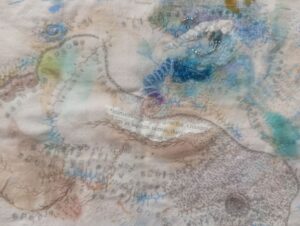
There’s a legend about a Welsh king called Locrinus who was married to Gwendolen but had a child with his mistress, Sŵs-wên. They called their daughter Hafren. After divorcing Gwendolen, Locrinus married Sŵs-wên and they lived with Hafren in a palace near the town of Caersws. When Locrinus was fell in battle. Gwendolen raised an army, took Caersws and became Queen. She had Sŵs-wên killed then decreed that Hafren should be thrown into a nearby river and drowned. Many of her soldiers pleaded that Hafren should be spared because of her beauty and youth but Gwendolen, consumed by jealousy and hatred, saw to it her orders were carried out. From that day the river Hafren was named to honour the innocent princess. The Romans thought of Hafren as a river goddess and renamed her Sabrina, which over the centuries was anglicised to Severn.
Hafren the Escapologist
The Hall of Residence I lived in when I was at university in Cardiff was called Hafren. I had a room with a sofa bed, a sink, a wardrobe, a desk and a little one bar electric fire. The School of Home Economics – known affectionately as “Cooks” – was opposite the BBC studios in Llandaff and within easy walking distance of The Heathcock and The Malsters pubs. You went to The Heathcock if you wanted to spot TV stars and to The Malsters if you were more interested in standing at the bar alongside legends of the Welsh rugby team who were at their playing (and winning) best in the late 70s. Until “Cooks” got absorbed by the University of Wales it had delusions of being an Oxford college. We had scouts (the Oxford term for a maid) to make our beds, tidy our rooms and leave us a packet of biscuits once a week. The communal kitchen was spotlessly clean, dishes were washed and put away by invisible hands and there was always fresh milk in the fridge. If only I had wanted to live in Llandaff, study Textiles and become a teacher. Sadly I hated the place, the subject and the career destination. My bedsit in Hafren was where I sat every evening, eating biscuits and planning my escape into another future.
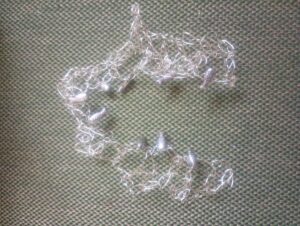
Have you guessed which story Hafren is telling? She’ll be part of the Manifest exhibtion at the Workers Gallery this autumn if you want to take a closer look.